

The ‘Lazy’ Walking Mistake That’s Secretly Ruining Your Fitness Goals”
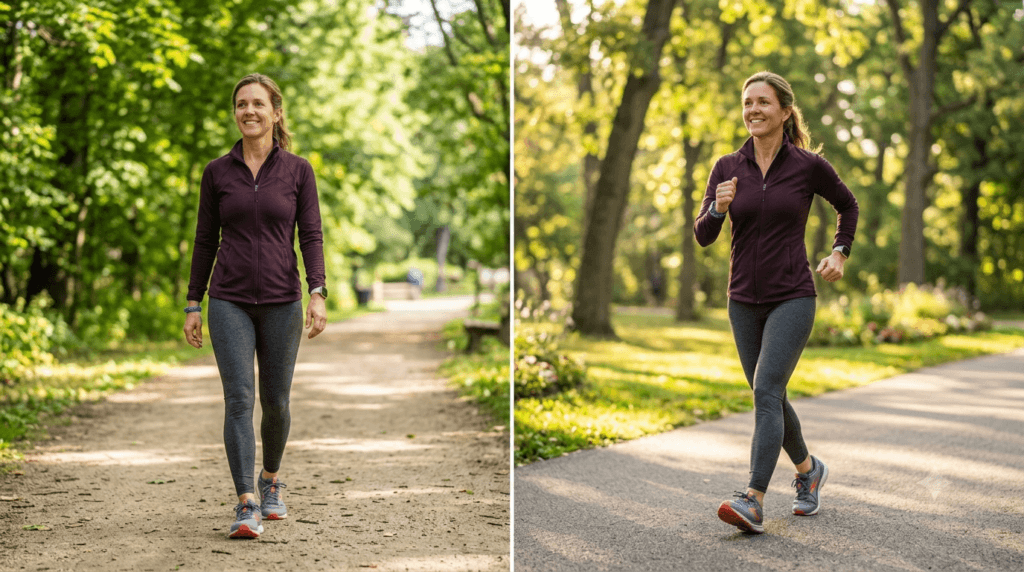
You lace up your sneakers, smash your 10,000 steps daily, and stay consistent for weeks. Yet, when you step on the scale, the numbers refuse to budge. Your energy levels feel exactly the same. Sounds frustratingly familiar, right ? As someone who loves analyzing real fitness trends, I noticed a huge pattern. The problem isn’t that you aren’t walking enough—it’s how you are walking. Most of us are making a simple, ‘lazy’ walking mistake without even realizing it. Let’s break down exactly what is blocking your results and how to fix it easily.
| Week | Duration | Pace / Strategy | Frequency |
|---|---|---|---|
| Week 1 | 20–25 Mins | Comfortable, steady pace | 5 Days / Week |
| Week 2 | 30 Mins | Add 1–2 short bursts of brisk walking | Most Days |
| Week 3 | 30 Mins | Alternate between normal and fast walking | Most Days |
| Week 4 | 30–40 Mins | Focus on consistency, maintain posture | Most Days |
You lace up your shoes, head outside, and check another workout off your list.
Yet weeks pass…
The scale barely changes.
Your energy feels the same.
And you’re left wondering:
“Am I doing something wrong?”
Here’s the surprising part:
It’s how they’re walking.
A few small habits—ones most people never think about—can make your walks feel less effective than they could be.
The good news?
They’re often easy to fix.
In this guide, you’ll discover the walking rule that many people unintentionally break, along with other common mistakes that may affect comfort, consistency, and results.
Why Walking Is Still One of the Best Exercises in 2026
Walking remains one of the most recommended forms of physical activity because it’s:
- Low impact
- Beginner friendly
- Easy to fit into daily life
- Suitable for many fitness levels
- Good for heart health and overall well-being
Unlike intense workouts, walking doesn’t require expensive equipment or a gym membership.
That’s one reason why it’s still one of America’s favorite ways to stay active in 2026.
The Walking Rule Many People Forget
Many people believe that walking longer is always better.
But the truth is
Walking in the right way matters more than simply walking farther.
That means paying attention to:
- Your pace
- Your posture
- Your body movement
- Your consistency
- Your recovery
Even small adjustments can make walking feel more comfortable and help you stay consistent over time.
Mistake #1: Walking at the Same Speed the Entire Time
One of the most common habits is walking at exactly the same pace from start to finish.
Adding short periods of faster walking followed by an easier pace may increase the challenge without requiring a longer workout.
This idea is similar to interval walking, which has become increasingly popular in these days .
Mistake #2: Looking Down the Entire Walk
Constantly looking at your phone or the ground can affect posture.
Instead:
✔ Look ahead.
✔ Relax your shoulders.
✔ Keep your chest open.
Better posture may also make walking feel easier and more natural.
Mistake #3: Forgetting Your body
Your legs aren’t the only muscles working.
Swinging your arms and your body naturally can help maintain rhythm and make your walk feel more efficient.
Avoid holding your arms stiffly at your sides unless needed for balance.
Mistake #4: Wearing the Wrong Shoes
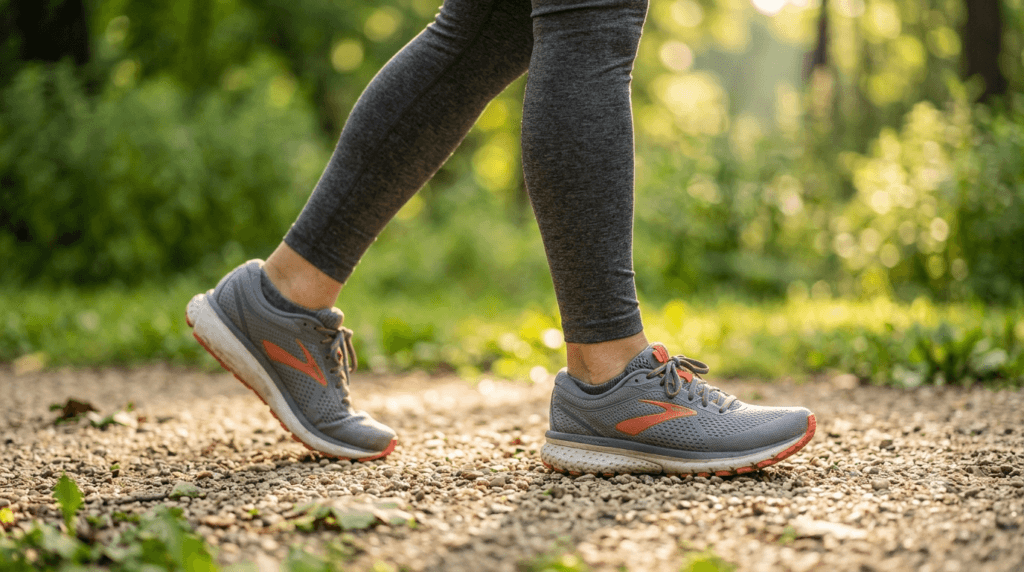
The wrong shoes may not only make walking uncomfortable but can also discomfort you from staying consistent.
Many people focus on walking distance but forget about what’s on their feet.
- Walk for 30 minutes
- Reach 6,000–10,000 steps
- Add five minutes each week
- Walk after lunch or dinner
Look for walking shoes that offer:
- Good arch support
- Cushioned soles
- A comfortable toe box
- A secure heel fit
You don’t necessarily need the most expensive pair. The best walking shoe is one that fits well and feels comfortable during your daily routine
Mistake #5: Walking Without a Goal
Walking without a clear purpose isn’t “bad,” but having a simple goal can help you stay motivated.
Instead of saying:
“I’ll walk whenever I have time.”
Try
- Walk for 30 minutes
- Reach 7,000–10,000 steps
- Add five minutes each week
- Walk after lunch or dinner
Small, realistic goals are often easier to maintain than ambitious plans.
Mistake #6: Skipping Recovery
Walking is gentle, but your body still benefits from recovery.
Signs you may need an easier day include:
- Persistent soreness
- Unusual fatigue
- Low motivation
- Poor sleep
Recovery doesn’t mean doing nothing. A lighter walk, stretching, or mobility exercises can help you stay active while giving your body time to recover.
Mistake #7: Ignoring Nutrition
What Real Fitness Communities on Reddit Are Saying
While researching why so many people get stuck on a weight loss plateau despite walking miles, I spent hours scanning health forums and Reddit threads. Here is what real people reported :
The Interval Magic: Users in walking groups confirmed that switching to ‘brisk intervals’ (fast walking for 2 minutes, normal for 3 minutes) helped them break their fat loss plateau faster than doing 1-hour slow”walks.
The Posture Fix: Many complained about lower back pain during long walks. The community consensus? It almost always happens when you stare down at your phone, shifting your body’s natural alignment.
The Metabolism Factor: A common discussion thread highlights that walking is amazing for active recovery, but your deep cellular metabolism is sluggish ,walking alone fills like an uphill battle.
Walking alone isn’t a magic solution for weight loss.
Your daily eating habits also play a major role.
A balanced plate with:
- Lean protein
- Fruits
- Vegetables
- Whole grains
- Healthy fats
can support your overall health and fitness goals.
Does Walking Really Help With Weight Loss?
Walking can absolutely be part of a weight-loss plan.
It helps increase daily physical activity and may support calorie expenditure.
However, results vary depending on several factors, including:
- Nutrition
- Sleep
- Stress
- Consistency
- Overall activity level
Rather than expecting dramatic changes after a few walks, think of walking as a long-term habit that supports a healthier lifestyle.
A Simple Walking Routine for Beginners
If you’re just getting started, here’s an easy weekly plan.
Week 1
- Walk 20–25 minutes
- Comfortable pace
- 5 days per week
Week 2
Increase your walk to 30 minutes.Add one or two short periods of brisk walking..
Week 3
Alternate between normal and faster walking every few minutes.
Maintain good posture and arm movement.
Week 4
Aim for 30–40 minutes most days of the week.
Focus on consistency rather than speed.
Quick Walking Checklist ✅
Before your next walk, ask yourself:
✔ Am I standing tall?
✔ Am I looking ahead instead of at my phone?
✔ Are my arms moving naturally?
✔ Am I wearing comfortable shoes?
✔ Do I have a simple goal for today’s walk?
✔ Am I staying consistent each week?
“Read next : Even a few small improvements can make your walking routine feel more enjoyable.
Going Beyond Walking: The 2026 Weight Loss Secret
Fixing your walking posture and adding intervals will definitely boost your daily calorie burn. But let’s be completely honest: if your internal metabolism is slow, even walking 20,000 steps won’t give you the flat belly you want.
After looking at dozens of real human transformations this year, I found that mixing a structured beginner routine with the right natural dietary catalyst is what actually triggers fat burn.
Click Here to See the Natural Cellular Breakthrough That US Fitness Experts Are Recommending to Boost Metabolism Instantly.
Frequently Asked Questions
What is the biggest walking mistake?
Many people walk at the same slow pace throughout the entire workout. Adding occasional brisk intervals may make the walk more challenging while keeping it beginner-friendly.
Is walking every day okay?
For many healthy adults, daily walking is a practical way to stay active. If you have a medical condition or experience pain while walking, it’s best to consult a healthcare professional.
Is it better to walk faster or longer?
Both can be helpful. The best approach depends on your fitness level, health goals, and consistency. Many people benefit from gradually increasing pace or duration over time.
How many minutes should I walk each day?
General physical activity guidelines often recommend aiming for regular moderate-intensity activity throughout the week. Even shorter walks can contribute toward your overall activity goals.
Final Thoughts
Walking doesn’t have to be complicated.
In fact, the biggest improvements often come from correcting small habits rather than chasing extreme workouts.
Pay attention to your posture.
Choose comfortable shoes.
Move your arms naturally.
Add a little variety to your pace.
Most importantly, stay consistent.
The walking rule that almost everyone breaks isn’t about taking too few steps—it’s forgetting that how you walk can be just as important as how far you walk.
Small changes practiced consistently can make your daily walks more comfortable, more enjoyable, and easier to stick with over the long run.
Medical Disclaimer: This article is for educational and informational purposes only and should not be considered medical advice. Always consult a qualified healthcare professional before starting a new exercise program, especially if you have a medical condition, injury, or concerns about your health.