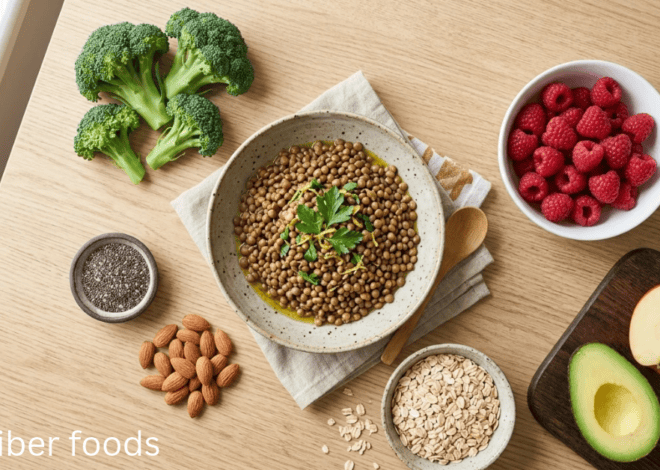

Fibermaxxing for Women Over 40: What It Actually Means (The Ultimate Gut & Waistline Reset Guide)
The Truth Nobody Told You About Your Changing Body
You are doing everything “right.” You eat your salads. You track your calories. You still squeeze in your 45 minutes of cardio, even on the days your knees ache and your energy is already running on fumes. And yet, somehow, the scale creeps up. Your favorite jeans feel tighter around the middle. You wake up already bloated, before you’ve even had your morning coffee.
If this sounds familiar, I want you to hear this clearly: you are not lazy, and you are not doing anything wrong. What you’re experiencing has a name, and it has nothing to do with willpower. Somewhere around your early-to-mid 40s, your body quietly rewrote its own rulebook. The metabolic strategies that worked flawlessly in your 20s and 30s stopped applying, and nobody handed you the new manual.
Here’s what’s actually happening underneath the surface. Your hormones are shifting — estrogen is declining in an unpredictable, rollercoaster pattern, not a smooth slope. This shift changes where your body stores fat, pulling it away from your hips and redirecting it straight to your midsection, around your organs. Your gut bacteria, the trillions of tiny workers that used to process food efficiently, are becoming less diverse and more sluggish. And your blood sugar response, once forgiving of a cookie here or a glass of wine there, has become far more sensitive, spiking harder and crashing lower than it used to. This is a full-body recalibration, not a personal failure.
Decoding “Fibermaxxing”: Why Everyone Is Suddenly Obsessed
So what exactly is this trend that’s taking over wellness feeds in 2026?
Fibermaxxing is the deliberate, strategic practice of maximizing fiber intake — pushing well past the “recommended minimum” most of us were taught, and instead aiming for a therapeutic range that actively works with your changing metabolism instead of against it.
- For years, fiber was treated like a boring afterthought — something you added almost apologetically, a side note next to protein and “clean eating.” That’s changed. Nutritionists and metabolic researchers are now treating fiber as one of the single most powerful levers a woman over 40 can pull, because it directly intersects with the three systems working against her: hormone clearance, blood sugar stability, and gut health.
- It’s become the premium health trend of the year because, unlike restrictive diets, fibermaxxing isn’t about eating less. It’s about eating smarter, denser, and more strategically — and the results (less bloating, a flatter stomach, steadier energy) tend to show up faster than most women expect.
The Metabolic Science, Explained Simply
The Estrogen Connection :
When estrogen declines, your body loses one of its natural “fat distribution managers.” Fat that used to settle in the hips and thighs now gets rerouted to visceral fat — the deep, dangerous fat that wraps around your organs and drives that stubborn, hard midsection bloat.Here’s where fiber becomes almost magical: your liver processes and clears “spent” hormones (used estrogen that’s ready to exit the body) through your digestive tract. If you’re not eating enough fiber, those spent hormones can actually get reabsorbed back into your bloodstream instead of leaving your body, throwing your hormonal balance further off. Fiber binds to these spent hormones and escorts them out, supporting a cleaner, more balanced hormonal environment.
The Insulin Shield
Think of fiber as a slow-release engine for your blood sugar. Without it, a bowl of pasta or a slice of toast hits your bloodstream fast, causing a sharp glucose spike. Your body responds by releasing a flood of insulin — and insulin’s job, quite literally, is to store fat.
Fiber slows digestion down, spreading out the release of sugar into your bloodstream over hours instead of minutes. Less spike, less insulin flood, less automatic fat storage. This is one of the biggest reasons fibermaxxing supports a flatter stomach — it’s not magic, it’s blood sugar physics.
The Gut Microbiome Revolution
Your gut bacteria eat what you eat. When you feed them fiber, especially the fermentable kind found in beans, seeds, and certain vegetables, they produce compounds called short-chain fatty acids. These compounds have been linked to reduced inflammation, better appetite regulation, and a more efficient metabolism. A well-fed microbiome also tends to mean fewer intense cravings, less severe bloating, and more consistent energy throughout the day.
The 4 Ultimate “Fibermaxxing” Pillars
Pillar 1: The Seed Supercharge
Chia, flax, and basil seeds are small but mighty — they form a gel-like coating in your digestive tract that slows sugar absorption and keeps you full for hours.
Chia seeds: Soak 1–2 tablespoons in water, almond milk, or yogurt for at least 15 minutes (or overnight) until they form a gel. Never eat them dry with water — hydrate them first.
Flaxseed: Always use ground flaxseed, not whole — whole seeds pass through undigested. Start with 1 tablespoon daily, stirred into oatmeal or smoothies.
Basil seeds (sabja): Soak 1 teaspoon in a glass of water for 10–15 minutes until they plump up. Sip alongside meals for a natural bloat-reducing effect.
Best timing: 20–30 minutes before a meal, to promote a gentle appetite-regulating effect and steadier blood sugar response.
Pillar 2: The Mighty Legumes & Berries
Raspberries and blackberries are among the highest-fiber fruits available, often delivering 6–8 grams per cup, while staying relatively low in sugar compared to other fruits.
Lentils and black beans are fiber and protein powerhouses in one — aim for a ½-cup serving at lunch or dinner, which alone can add 7–8 grams of fiber.
Add berries to breakfast (yogurt, oatmeal) rather than as an isolated snack — pairing fiber with protein slows absorption even further.
Rinse canned beans thoroughly to reduce sodium and ease digestion.
Pillar 3: The Prebiotic Greens
Leafy greens (spinach, arugula, kale): Support gut lining repair and provide gentle, non-fermentable bulk that eases digestion rather than overwhelming it.
Avocado: Half an avocado provides roughly 5 grams of fiber, plus healthy fats that support hormone production.
Artichokes: One of the most prebiotic-rich vegetables available — steam or roast and enjoy with a squeeze of lemon.
Pillar 4: The 35-Gram Golden Goal
Jumping straight to 35 grams of fiber overnight is the #1 cause of gas, cramping, and discomfort. Build up gradually:
Here’s the honest part of this conversation.
Week 1: Add 5 grams above your current intake (roughly one extra fiber-rich food per day)
Week 2: Add another 5 grams, and increase water intake to at least 2.5–3 liters daily (fiber without water causes bloating and constipation, it doesn’t prevent it)
Week 3: Introduce one legume-based meal daily
Week 4: Layer in seeds before meals and aim for 3+ different fiber sources per day
By week 4, most women comfortably reach 30–35 grams daily without digestive distress.
The Bridge: Why Fibermaxxing Alone Sometimes Isn’t Enough
Here’s the honest part of this conversation. Fibermaxxing builds the foundation — and it’s a powerful one. But if you’ve spent years, maybe decades, with a slower metabolism and an imbalanced gut environment, those systems can be genuinely stubborn to shift through diet alone. It’s not that you’re failing; it’s that deeply rooted metabolic receptors and gut flora imbalances sometimes need extra, targeted support to catch up to the healthy habits you’re now building.
This is exactly why so many women in this stage layer a premium, organic metabolic-support formula on top of their fibermaxxing routine — something formulated specifically to work alongside gut and hormone health, not against it.
F.A.Q
Q.1) Is fibermaxxing safe if I have IBS or a sensitive stomach?
Everybody’s tolerance is different. Increase fiber gradually and introduce one new source at a time so you can spot what agrees with you.
Q.2) Can I get to 35g of fiber through food alone, or do I need a supplement?
Most women can get close through food alone by following the 4 pillars consistently. A fiber supplement can help fill small gaps, but whole foods should be the base.
Q.3) Will fibermaxxing help with menopause belly specifically?
It supports the underlying systems (blood sugar, hormone clearance, gut health) tied to midsection weight — but it works best as part of a broader lifestyle approach, not a standalone fix.
Q.4) How fast will I notice a difference?
Less bloating and steadier energy are usually the first signs, often within 1–2 weeks. Visible changes take longer and vary person to person.
Medical Disclaimer:
This article is for informational purposes only and is not medical advice. Always consult your doctor before making significant changes to your diet, especially if you have a digestive condition, are pregnant, or take medication. Individual results vary.