
Mediterranean Diet for Beginners: What to Eat, What to Skip, and How to Start This Week
You’ve probably tried at least one “perfect” diet that lasted about nine days.
Same here. Most diets feel like a strict teacher watching your plate. The Mediterranean way of eating feels more like a friend saying, “Just add more good stuff.”
Let’s make it simple.
So, what exactly is the Mediterranean diet?
It’s not a strict plan with rules and counting. It’s a style of eating inspired by countries around the Mediterranean Sea, like Greece, Italy, and Spain.
The focus is on whole, everyday foods. Think vegetables, fruit, beans, nuts, olive oil, and fish.
Experts commonly recommend it because it’s easy to follow for the long run. No weird powders. No “forbidden” foods list.
What goes on your plate?
Here’s the basic picture.
Eat often:
- Vegetables and fruit
- Whole grains (oats, brown rice, whole wheat)
- Beans, lentils, and chickpeas
- Nuts and seeds
- Extra virgin olive oil
Eat a few times a week:
- Fish and seafood
- Eggs
- Yogurt and cheese
- Poultry
Keep occasional:
- Red meat
- Sweets and pastries
- Processed snacks
Notice something? Nothing is banned. Some things just move to the “sometimes” shelf.
Why do people love it?
A few simple reasons:
- It’s flexible. You can eat at restaurants and still follow it.
- It’s filling. Fiber-rich foods like beans and veggies keep you satisfied.
- It’s tasty. Olive oil, herbs, lemon, and garlic do a lot of work.
Research suggests this way of eating is linked with better long-term health. Still, it isn’t a magic fix. Think of it as a good habit, not a quick result.
Your first week: start small
Don’t change everything on Monday. That’s how people quit by Thursday.
Pick one change a day:
- Day 1: Swap butter for olive oil when cooking
- Day 2: Add one extra vegetable to dinner
- Day 3: Try a bean-based meal, like lentil soup
- Day 4: Have fruit and nuts as a snack
- Day 5: Eat fish instead of red meat once
- Day 6: Switch to whole grain bread or pasta
- Day 7: Cook one meal slowly and sit down to enjoy it
That’s it. Seven small steps, and you’ve started.
A simple day of eating
Here’s what an easy day could look like:
Breakfast: Greek yogurt with berries and a handful of walnuts
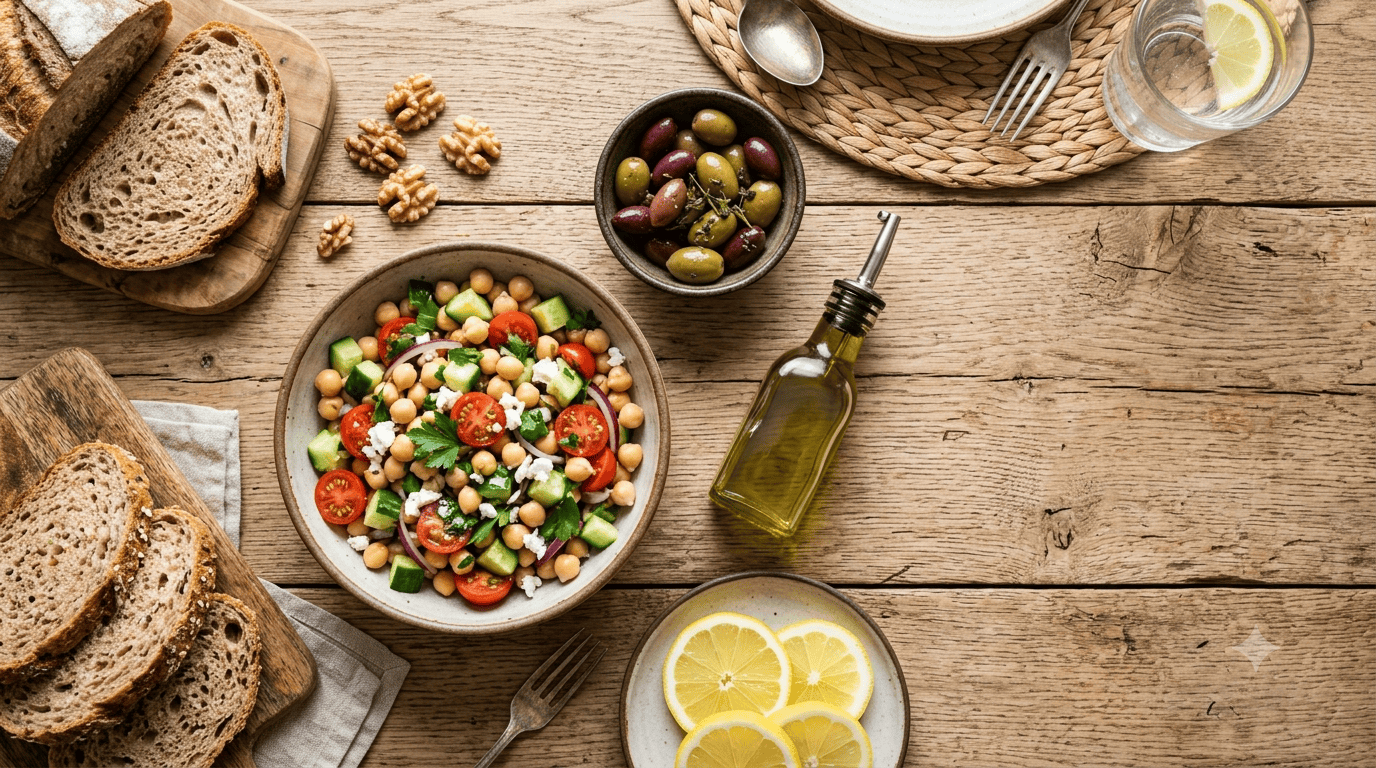
Lunch: Chickpea salad with cucumber, tomato, olive oil, and lemon
Snack: An apple with a few almonds
Dinner: Baked salmon with roasted vegetables and brown rice
Nothing fancy. Just real food.
Common mistakes beginners make
- Going too strict. Perfection isn’t the goal.
- Using too much olive oil. It’s healthy, but calories still count.
- Forgetting beans. They’re a Mediterranean favorite and very budget-friendly.
- Eating “Mediterranean” packaged foods. A label doesn’t make it whole food.
Can you do it on a budget?
Yes. In fact, many of its staples are cheap.
- Dried beans and lentils
- Oats and brown rice
- Frozen vegetables
- Canned fish, like sardines or tuna
You don’t need fancy ingredients. A well-stocked pantry does most of the work.
Want a ready-made plan?
If planning meals feels like homework, a simple guide can save you time.
Where to go next
Once you’re comfortable, these will help:
- The bottom line
- The Mediterranean diet works for many people because it asks for progress, not perfection. Add more whole foods, enjoy your meals, and don’t panic when you eat pizza on a Friday.
- Start with one small change this week. That’s enough.


