
Japanese Walking Method: Why Everyone Is Talking About This 30-Minute Walking Routine
“If you are tired of spending hours walking on the treadmill without seeing any real changes in your body, you are not alone. In 2026, fitness is no longer about working out longer—it’s about working out smarter. That is exactly why the Japanese Walking Method is going completely viral on TikTok and Pinterest right now.As a fitness coach who tracks real lifestyle shifts, I wanted to see if this 30-minute routine is actually worth the hype or just another internet fad. Let’s look past the viral videos and break down how this simple interval technique can completely transform your daily walks.”
Walking has always been one of the simplest ways to stay active. But in 2026, a Japanese fitness technique is attracting attention because it promises more benefits without requiring longer workouts.
Instead of walking at the same speed for 30 or 60 minutes, this method alternates between fast walking and slow recovery walking. The result is a workout that feels manageable for beginners while helping improve endurance, heart health, calorie burn, and lower-body strength.
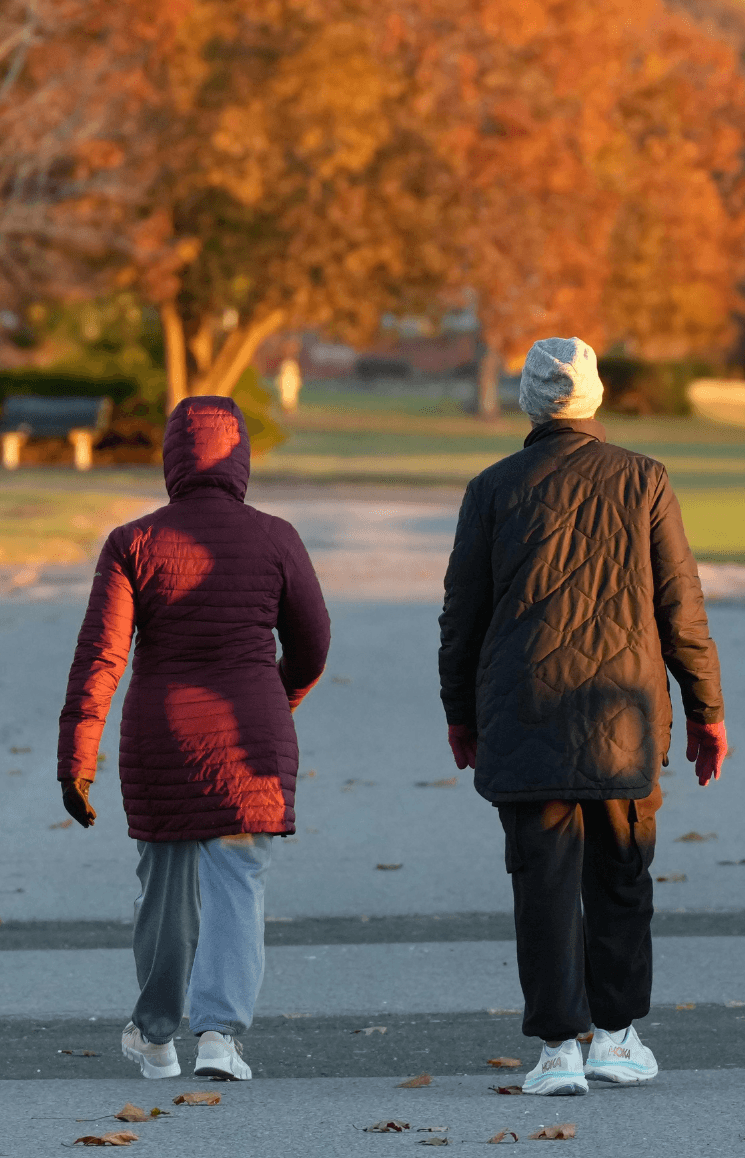
Unlike many social media fitness trends, the Japanese Walking Method isn’t based on viral hacks or expensive equipment. It comes from research on interval walking and has been discussed by health professionals because of its practical approach.
If you’re looking for a workout that fits into a busy schedule, this could be one of the easiest habits to build.
If you’re trying to lose weight, you may also enjoy our guide on Walking for Weight Loss: 10,000 vs 15,000 Steps.
What Is the Japanese Walking Method?
The Japanese Walking Method is a form of interval walking.
Instead of maintaining one pace, you alternate between:
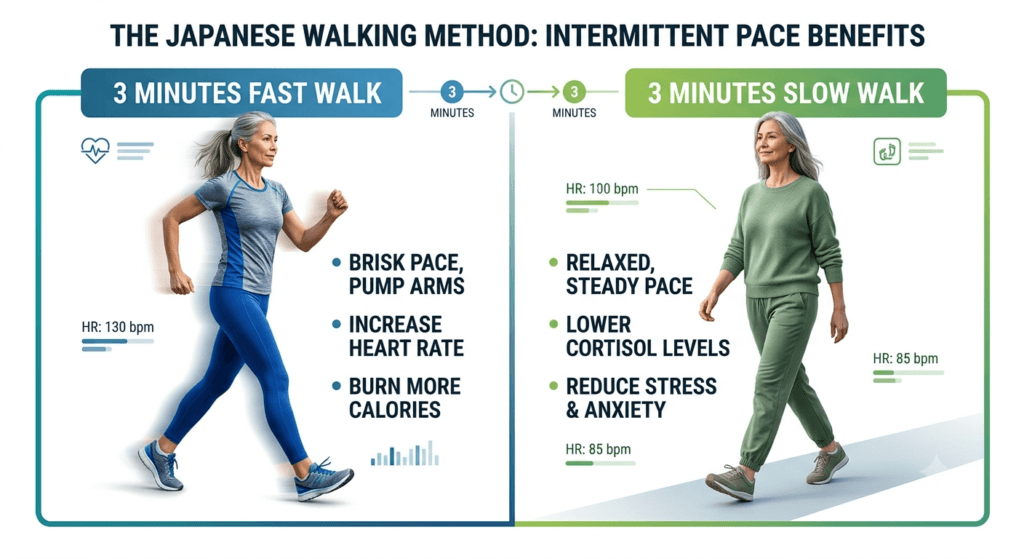
- 3 minutes of brisk walking
- 3 minutes of slow walking
Repeat this cycle five times for a total workout of about 30 minutes.
During the brisk intervals, your breathing should become noticeably heavier, but you should still be able to speak in short sentences. During the slower intervals, your breathing returns closer to normal before the next fast segment begins.
This pattern challenges your cardiovascular system more effectively than steady walking while remaining low impact.
Why Is It Trending in 2026?
Fitness trends are shifting away from extreme workouts.
Many Americans now prefer exercises that are:
- Beginner friendly
- Joint friendly
- Time efficient
- Sustainable long term
- Easy to do outdoors
The Japanese Walking Method checks every one of these boxes.
It also requires:
- No gym membership
- No expensive equipment
- No fitness experience
- No complicated workout plans
For many people, consistency matters more than intensity—and that’s exactly why this method has become popular on Pinterest, TikTok, and wellness blogs.
How to Do the Japanese Walking Method
Here’s the complete routine.
Step 1
Walk slowly for a few minutes to warm up.
Step 2
Walk briskly for 3 minutes.
Aim for a pace where:
- Your heart rate increases
- Your breathing becomes faster
- You can still talk but not comfortably hold a long conversation
Step 3
Slow down for 3 minutes.
Allow your breathing and heart rate to recover before the next interval.
Step 4
Repeat this cycle five times.
Total workout:
30 minutes
Step 5
Finish with a slow cool-down for several minutes.
Stretch your calves, hamstrings, hips, and ankles if possible.
What Makes This Different From Regular Walking?
Many people walk at exactly the same pace every day.
While regular walking is healthy, your body eventually adapts.
Alternating speeds creates small cardiovascular challenges that encourage your body to work harder during the faster intervals while allowing enough recovery to maintain the workout.
Think of it as giving your body repeated “mini challenges” instead of one long, comfortable walk
Potential Benefits of the Japanese Walking Method
Although individual results vary, interval walking may help support:
Better Heart Health
Changing intensity encourages your heart to work through different effort levels, improving cardiovascular fitness over time.
Increased Calorie Burn
Brisk walking generally burns more calories than slow walking, making interval sessions more energy-demanding than casual strolling..
Improved Leg Strength
Walking faster recruits more muscles in the:
- Glutes
- Quadriceps
- Hamstrings
- Calves
Better Endurance
Many people notice they can walk longer distances with less fatigue after consistently practicing interval walking
Joint-Friendly Exercise
Unlike running, walking places less stress on the knees and hips while still providing meaningful health benefits..
Who Should Try It?
What Real People on Reddit Say About the Japanese Method.
Before recommending this routine to my clients, I wanted to see how everyday people are reacting to it. I dived deep into health subreddits and fitness forums to gather real feedback. Here is the general consensus.
Surprisingly Intense: Many users reported that while ‘3 minutes of fast walking’ sounds easy on paper, repeating it five times actually gets your heart pumping much faster than expected.
Great for Joint Pain: Several users over 40 mentioned they switched from running to this Japanese method because it gave them the same ‘runner’s high’ without hurting their knees.
The Consistency Secret: Busy professionals shared that a 30-minute structured block is far easier to maintain daily than chasing the traditional 10,000-step goal.”
This workout may be suitable for:
- Busy professionals
- Adults over 40
- Beginners starting a fitness journey
- People returning to exercise after a break
- Anyone who dislikes running
- Individuals looking for a low-impact cardio option
If you have a heart condition, severe joint pain, balance problems, or another medical condition, consult your healthcare provider before starting a new exercise program. Pairing interval walking with a protein-rich diet may improve recovery and help maintain lean muscle.
Common Mistakes Beginners Make
Many people accidentally reduce the effectiveness of interval walking.
Avoid these mistakes:
❌ Walking too slowly during the brisk intervals
❌ Sprinting instead of brisk walking
❌ Skipping recovery periods
❌ Looking down at your phone during the workout
❌ Wearing unsupportive shoes
❌ Starting too fast without warming up
Does the Japanese Walking Method Help With Weight Loss?
The Japanese Walking Method can support weight loss when combined with a calorie-controlled diet and regular physical activity. While no walking routine can “melt fat” on its own, interval walking may help you burn more calories than an easy-paced walk of the same duration because your body works harder during the brisk intervals.
Weight loss depends on several factors, including:
- Daily calorie intake
- Age and metabolism
- Body weight
- Walking speed
- Consistency
- Sleep and stress levels
If your goal is fat loss, aim to combine this workout with a balanced, protein-rich diet and strength training two to three times per week for the best long-term results.
What Does the Research Say?
One reason the Japanese Walking Method has gained attention is that it is based on interval walking research rather than being just another social media trend.
Research has suggested that interval walking programs can improve:
- Aerobic fitness
- Blood pressure
- Leg strength
- Blood sugar control
- Overall physical function, particularly in middle-aged and older adults
However, it’s important to remember that individual results vary, and more research is still being conducted across different populations. The method should be viewed as one effective form of exercise—not a miracle solution.
How Many Calories Can You Burn?
The exact number depends on your body weight, walking speed, terrain, and fitness level.
Here are rough estimates for a 30-minute Japanese Walking Method workout:
| Body Weight | Estimated Calories Burned |
|---|---|
| 125 lbs (57 kg) | 140–180 calories |
| 155 lbs (70 kg) | 170–220 calories |
| 185 lbs (84 kg) | 200–260 calories |
| 215 lbs (98 kg) | 230–300 calories |
These are estimates only. Fitness trackers and smartwatches may provide a more personalized approximation.
4-Week Beginner Japanese Walking Plan
Week 1
- 3 sessions
- 3 fast + 3 slow
- Repeat 4 cycles
- Total: ~24 minutes
Week 2
- 4 sessions
- 3 fast + 3 slow
- Repeat 5 cycles
- Total: ~30 minutes
Week 3
- 5 sessions
- Maintain brisk pace during fast intervals
- Focus on good posture and arm movement
Week 4
- 5 sessions
- Add gentle hills or slight inclines if comfortable
- Track your distance and progress
The key isn’t to walk faster every week—it’s to stay consistent.
Best Tips for Success
✔ Wear supportive walking shoes.
✔ Swing your arms naturally.
✔ Keep your shoulders relaxed.
✔ Walk tall instead of looking down.
✔ Stay hydrated before and after your walk.Use the Talk Test:
- Slow interval = easy conversation
- Fast interval = talking is possible, but singing isn’t comfortable
Who Should Avoid This Workout?
Although interval walking is low impact, it isn’t ideal for everyone.
Talk with your healthcare provider before starting if you have:
- Uncontrolled heart disease
- Severe arthritis
- Recent surgery
- Frequent dizziness
- Balance disorders
- Medical conditions that limit exercise safely
If you experience chest pain, severe shortness of breath, or dizziness during exercise, stop immediately and seek medical attention.
The Missing Piece in Your 2026 Weight Loss Routine
While the Japanese Walking Method is excellent for boosting cardiovascular health and burning calories, it can only do so much if your resting metabolism is completely asleep.If your main goal this year is dropping stubborn belly fat, real-world data shows that pairing this 30-minute interval walk with a natural cellular metabolism activator produces results three times faster.
more authentic, science-backed wellness guides and career strategies without the annoying AI robotic fluff? Make sure to head over to our homepage and drop your email to join the free zenglowfit newsletter today
Frequently Asked Questions
Is the Japanese Walking Method better than 10,000 steps?
Not necessarily.
The two approaches measure different things. A step goal encourages daily movement, while the Japanese Walking Method emphasizes exercise intensity through intervals. For many people with limited time, a focused 30-minute interval walk may be easier to fit into their schedule.
How often should I do it?
Many research programs have participants perform interval walking about 4 days per week, although your ideal routine depends on your fitness level and recovery.
Can beginners do it?
Yes.
Beginners can simply reduce the walking speed during the brisk intervals and gradually increase intensity over several weeks.
Can I do it on a treadmill?
Absolutely.
Most treadmills allow quick speed adjustments, making interval walking simple indoors.
Is it better than running?
Not necessarily.
Running generally burns more calories in less time, but interval walking is easier on the joints and may be more sustainable for many beginners and older adults.
Final Verdict
The Japanese Walking Method isn’t a shortcut to instant weight loss—but that’s exactly what makes it valuable.
Instead of chasing complicated fitness trends, it offers a simple, structured routine that can fit into everyday life. Research suggests interval walking can improve aerobic fitness, leg strength, and cardiovascular health when practiced consistently, especially in middle-aged and older adults.
If you’re looking for a low-impact workout that’s beginner-friendly, free, and practical, this method is well worth trying.