The 30g Protein Breakfast Trend: Why Women Over 40 Are Making the Switch in 2026
What if one simple change to your breakfast could help you stay fuller for longer, support healthy muscles, and give you more energy throughout the day?
That’s exactly why the 30g protein breakfast trend is becoming one of the biggest wellness movements in the United States in 2026.
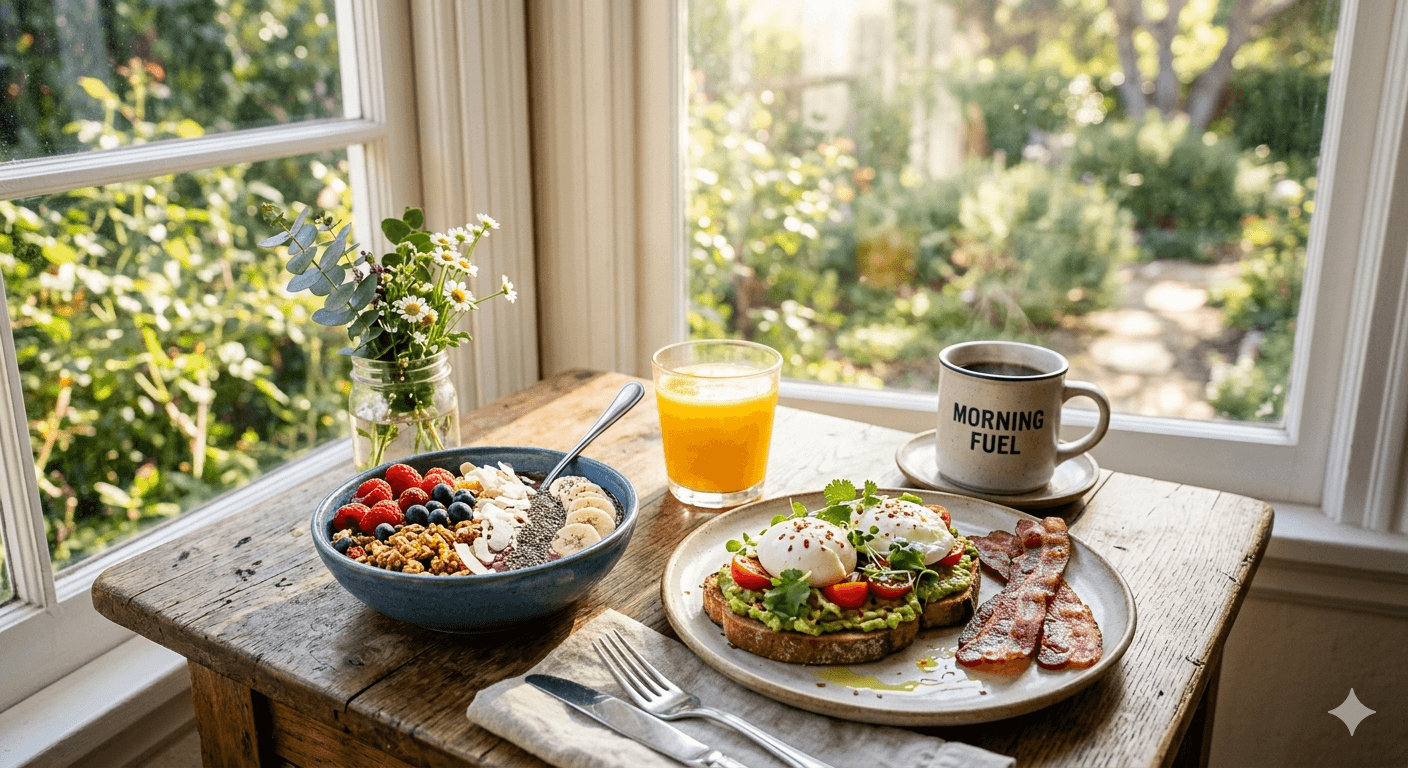
Instead of starting the day with sugary cereals, pastries, or toast alone, many nutrition experts are encouraging adults—especially women over 40—to aim for around 30 grams of protein at breakfast.
This trend isn’t about following another restrictive diet or buying expensive supplements. It’s about giving your body the nutrients it needs after an overnight fast.
As women get older, maintaining muscle mass becomes more important.If you’re also exploring natural approaches to weight management, you may enjoy reading our guide on Berberine vs Ozempic: Is “Nature’s Ozempic” Safe for Weight Loss? Protein plays a key role in supporting muscles, keeping you satisfied between meals, and helping you meet your daily nutrition goals.
If you’ve been feeling hungry shortly after breakfast or struggling to stay energized until lunch, your morning meal may be missing one important ingredient: enough protein.
In this guide, you’ll learn why the 30g protein breakfast trend is gaining attention in 2026, how much protein you really need, and easy breakfast ideas you can make at home.
Why Is Everyone Talking About 30 Grams of Protein?
For years, breakfast focused mainly on carbohydrates.
Toast, pancakes, cereal, muffins, and fruit juices became the standard morning meal for millions of Americans.
While these foods can provide energy, many are relatively low in protein. As a result, some people feel hungry again within just a few hours.
A breakfast containing around 30 grams of protein may help improve fullness and make it easier to meet your daily protein needs.
This is one reason nutrition professionals are placing greater emphasis on protein-rich breakfasts in 2026.
Combined with regular physical activity and a balanced diet, adequate protein can be an important part of healthy aging.
Why Protein Becomes More Important After 40
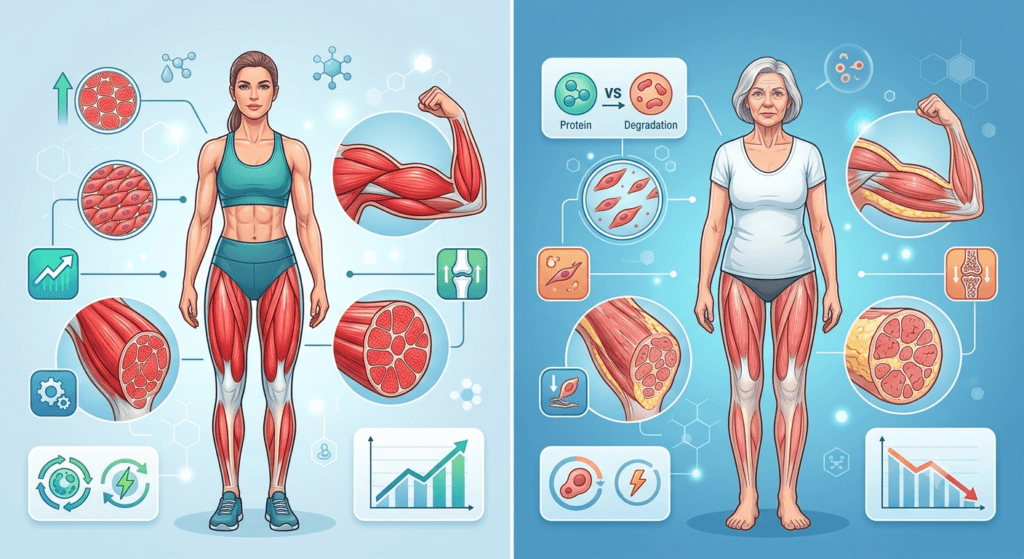
As we age, our bodies naturally begin to lose muscle mass. This process can start gradually in adulthood and becomes more noticeable over time.
For women over 40, preserving muscle is important because muscle supports:
- Healthy metabolism
- Daily strength
- Balance and mobility
- Bone health
- Long-term independence
Getting enough protein throughout the day, including at breakfast, is one way to support these goals.
Protein also helps repair tissues after exercise and contributes to the maintenance of lean muscle when combined with strength training.
This is why many registered dietitians recommend spreading protein intake across all meals instead of eating most of it only at dinner.
Benefits of a 30g Protein Breakfast
A balanced breakfast that contains enough protein may offer several potential benefits.
1. Helps You Feel Full Longer
Protein generally takes longer to digest than simple carbohydrates.
Including protein at breakfast may help reduce mid-morning hunger and make it easier to avoid unnecessary snacking.
2. Supports Healthy Muscles
Muscles need protein for maintenance and repair.
Whether you enjoy walking, strength training, yoga, or simply want to stay active, protein provides essential building blocks for muscle health.
3. Steady Morning Energy
Many sugary breakfasts can lead to an energy crash later in the morning.
Pairing protein with fiber-rich foods may help create a more balanced meal that keeps you energized for longer.
4. Supports Healthy Aging
Healthy aging isn’t just about living longer.
It’s about staying active, independent, and feeling strong.
Meeting your daily protein needs is one part of an overall healthy lifestyle that includes regular movement, sleep, and balanced nutrition
Nutrition is only one part of healthy aging. A simple skincare routine can also help protect your skin during the summer months. Read our guide to the 3-Step Summer Skincare Routine in 2026.
How Much Protein Do Women Over 40 Need?
Protein needs vary depending on age, body size, activity level, and overall health.
Many women can benefit from including a meaningful source of protein at each meal instead of relying on one protein-heavy dinner.
Rather than focusing only on total daily protein, many nutrition experts encourage spreading protein intake evenly throughout the day.
Breakfast is often the meal where people consume the least protein, making it a great opportunity to improve overall nutrition.
Best High-Protein Breakfast Foods
Building a protein-rich breakfast doesn’t have to be complicated.
Some excellent options include:
- Eggs
- Greek yogurt
- Cottage cheese
- Milk
- Tofu
- Smoked salmon
- Lean turkey slices
- Protein oats
- Chia seeds
- Nuts and seeds
- Peanut butter (in moderation)
- Protein smoothies
Combining two or three of these foods can help create a satisfying breakfast while also adding healthy fats, vitamins, and fiber.
7 Easy 30g Protein Breakfast Ideas
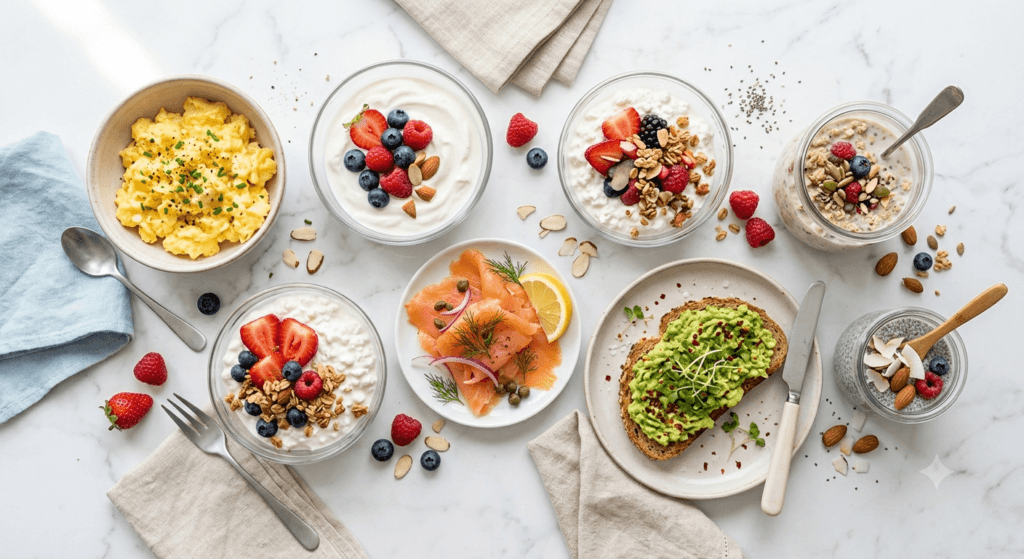
1. Greek yogurt with berries, chia seeds, and almonds
2. Three-egg vegetable omelet with whole-grain toast
3. Cottage cheese bowl with fresh fruit and walnuts
4. Protein smoothie with milk, banana, oats, and Greek yogurt.
5. Scrambled Eggs with Cottage Cheese
Mix cottage cheese into scrambled eggs for an extra protein boost. Serve with sliced avocado and whole-grain toast for a balanced breakfast.
6. Overnight Protein Oats
Combine rolled oats, Greek yogurt, chia seeds, milk, and your favorite berries. Let the mixture sit overnight for a quick, grab-and-go breakfast that’s rich in protein and fiber.
7. Smoked Salmon & Avocado Toast
Top whole-grain toast with mashed avocado, smoked salmon, and a sprinkle of pumpkin seeds. This breakfast provides protein, healthy fats, and important nutrients for heart and brain health.
Common Mistakes to Avoid
Following the 30g protein breakfast trend doesn’t mean eating protein alone. Here are some mistakes to avoid.
1. Forgetting Fiber
Protein works best when paired with fiber-rich foods like oats, berries, vegetables, and whole grains.
Adding fiber may help support digestion and keep you feeling satisfied longer.
2. Choosing Highly Processed Foods
Protein bars and processed breakfast meats may contain high amounts of sodium or added sugars.
Whenever possible, choose whole-food protein sources such as eggs, Greek yogurt, cottage cheese, beans, tofu, or fish.
3. Ignoring Healthy Fats
Healthy fats help create a balanced meal.
Consider adding:
- Avocado
- Nuts
- Seeds
- Olive oil
These foods provide nutrients that support overall health.
4. Skipping Breakfast Completely
Many busy adults skip breakfast and then feel extremely hungry later in the day.
Preparing simple, protein-rich meals in advance can make healthy eating more convenient.
A Sample 30g Protein Breakfast
Here’s one example of how you can build a balanced morning meal.
- 2 large eggs
- ¾ cup Greek yogurt
- ½ cup berries
- 1 tablespoon chia seeds
- 1 slice whole-grain toast
This combination provides protein along with fiber, vitamins, and healthy carbohydrates to start the day.
Remember that your individual nutrition needs may vary depending on your age, activity level, and health goals.
Can You Reach 30 Grams Without Protein Powder?
Yes.
While protein powder can be convenient, many people can reach approximately 30 grams of protein using everyday foods.
Examples include:
- Eggs + Greek yogurt
- Cottage cheese + nuts
- Tofu + soy milk
- Smoked salmon + eggs
- Greek yogurt + seeds + milk
Whole foods also provide vitamins,minerals, and other nutrients that support overall health.
Frequently Asked Questions
Is 30 grams of protein too much for breakfast?
For many healthy adults, 30 grams of protein at breakfast can fit within a balanced diet. However, individual needs vary, so it’s best to consider your overall daily nutrition and consult a healthcare professional if you have specific medical conditions.
Can protein help with weight management?
Protein may help increase feelings of fullness, which can make it easier for some people to manage hunger as part of a healthy eating pattern. It isn’t a magic solution, and overall diet and lifestyle still matter.
Is this breakfast trend only for women over 40?
No.
Anyone looking to include more protein in their morning meal may find these ideas useful. However, women over 40 often focus on protein because maintaining muscle becomes increasingly important with age.
Do I need protein powder every morning?
Not necessarily.
Many people can meet their breakfast protein goals using foods like eggs, Greek yogurt, cottage cheese, tofu, milk, or fish.
Protein powder is simply one option for convenience.
Final Thoughts
The 30g protein breakfast trend isn’t about following another social media craze.
It’s about making a simple change that may help support healthy aging, muscle maintenance, and better morning satisfaction.
Instead of relying on sugary breakfasts that leave you hungry within hours, try building meals around high-quality protein, fiber-rich carbohydrates, and healthy fats.
Small changes practiced consistently often have a greater impact than dramatic diets that are difficult to maintain.
If you’re looking for an easy wellness habit to start in 2026, a balanced, protein-rich breakfast may be one of the simplest places to begin.
If you’re researching supplements, don’t miss our article on Berberine Side Effects for Women Over 40 before trying it.