Home Workout Routines for Beginners: A Simple 4-Week Plan
By Zenglowfit
Let’s be honest: starting a workout routine feels harder than the workout itself. You open YouTube, see 50 different videos, and close the app feeling more confused than motivated.
If that sounds familiar, you’re not alone. The good news? You don’t need a gym, fancy equipment, or an hour every day. A few simple moves, done regularly at home, can be a great place to begin.
In this guide, I’ll share beginner-friendly home workout routines that are easy to follow, gentle on your body, and realistic for busy schedules.
Affiliate disclosure: Some links in this post are affiliate links. If you buy through them, I may earn a small commission at no extra cost to you. I only share things I think are genuinely useful.
Why Do Home Workouts Work So Well for Beginners?
Many people find that working out at home removes the biggest hurdles: travel time, gym nerves, and cost.
Here’s what beginners often love about it:
- No pressure. Nobody is watching you learn the moves.
- Flexible timing. Even 15 minutes before breakfast counts.
- Low cost. Your body weight is enough to start.
- Easy to stay consistent. Fewer excuses, more habit-building.
What Do You Need Before You Start?
Not much. Seriously.
- Comfortable clothes and sneakers
- A clear floor space about the size of a yoga mat
- A water bottle
- A timer (your phone works fine)
If you’d like a little extra comfort and variety, these basics may help:
- A non-slip exercise mat for cushioning your knees and back
- A set of light resistance bands for adding gentle challenge later
These are optional. You can follow every routine below without them.
How Often Should a Beginner Work Out?
A good starting point for most people is 3 days a week, with a rest day in between. Rest is not laziness. It’s when your body adjusts to the new movement.
On off days, a short walk or light stretching is a nice bonus.
As you feel stronger, you can slowly add a fourth day. There’s no rush.
Routine 1: The 15-Minute Full Body Starter
This is your go-to routine when you’re short on time or just getting back into movement.
How to do it: Do each move for 30 seconds, rest 30 seconds. Go through the list twice.
seconds, rest 30 seconds. Go through the list twice.
- Marching in place (warm-up, 1 minute)
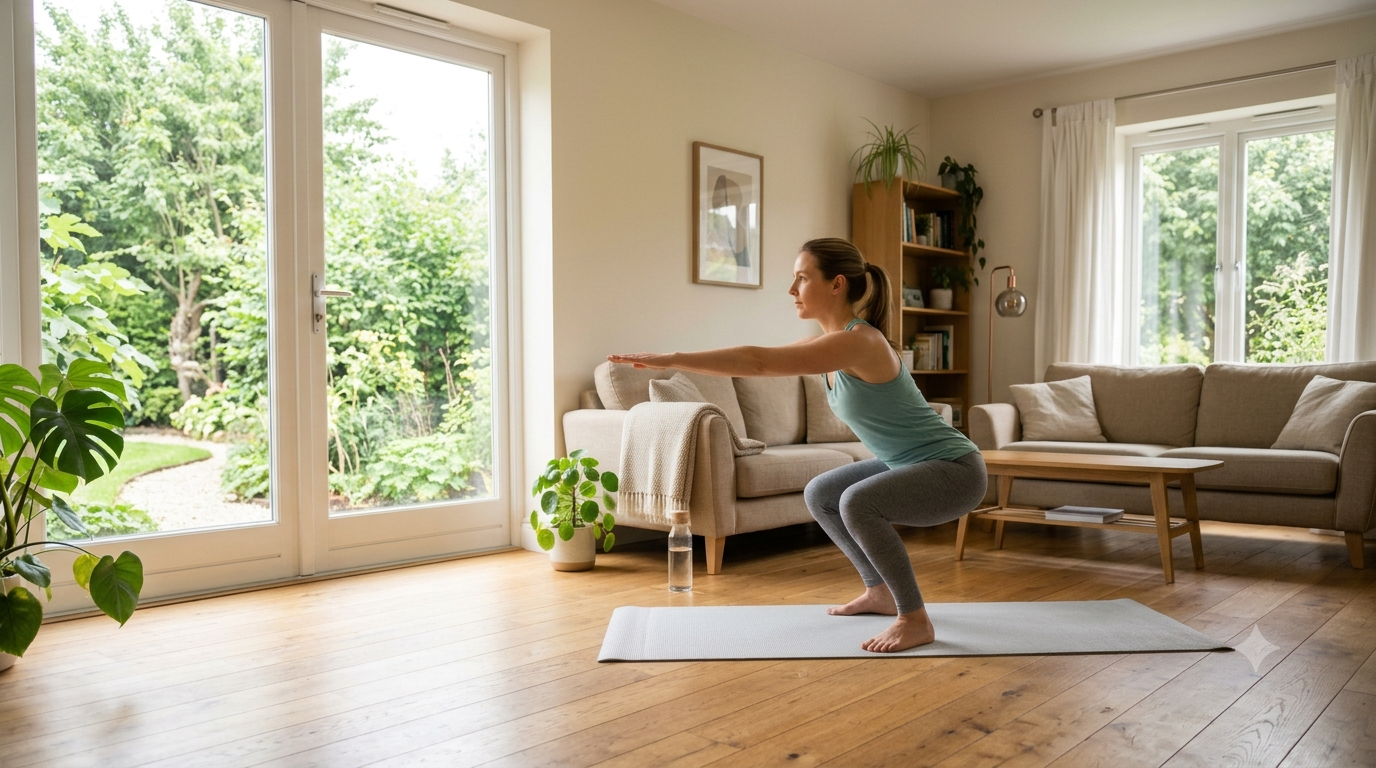
- Bodyweight squats (sit back like you’re reaching for a chair)
- Wall push-ups (hands on the wall, body in a straight line)
- Glute bridges (lie on your back, lift hips, squeeze at the top)
- Standing knee lifts (alternate sides, stay tall)
- Plank on knees (hold steady, breathe normally)
Finish with 2 minutes of gentle stretching.
Beginner tip: Focus on slow, controlled movement instead of speed. Good form matters more than the number of reps.
Routine 2: The Low-Impact Routine for Sore Knees and Tired Mornings
Not every day needs sweat and jumping. Some days you just want something kind to your body.
This routine is quiet, apartment-friendly, and low impact. It may suit you if you prefer gentle movement.
How to do it: 10 slow reps per move, 2 rounds.
- Side-lying leg lifts
- Seated or standing arm circles
- Step-backs (step one foot back, return, alternate)
- Bird-dog (opposite arm and leg extended on hands and knees)
- Cat-cow stretch (loosens the back and shoulders)
- Child’s pose (rest for 30 seconds)
Many people find that gentle routines like this make it easier to stay consistent, because they never feel overwhelming.
Routine 3: The 20-Minute Energy Booster
more challenge.
How to do it: 40 seconds of work, 20 seconds of rest. Repeat the circuit 3 times.
- Squat to calf raise
- Incline push-ups (hands on a sturdy counter or sofa edge)
- Reverse lunges (hold a wall for balance if needed)
- Superman hold (lie face down, lift arms and legs slightly)
- Mountain climbers (slow version)
- Dead bug (core-friendly and easy on the back)
Rest as much as you need. If a move feels too hard, swap in an easier version. That’s not cheating, it’s smart training.
Your Simple 4-Week Beginner Plan
Here’s an easy way to put it all together. Treat it as a flexible guide, not a strict rulebook.
- Week 1: Routine 1, three days. Focus on learning the moves.
- Week 2: Routine 1 twice + Routine 2 once. Notice how your body feels.
- Week 3: Routine 1 once + Routine 2 once + Routine 3 once.
- Week 4: Mix and match your favorites, 3 to 4 days.
Skip a day? No guilt. Just pick up at the next planned session.
What If You Want More Structure?
Some people love figuring things out alone. Others prefer a ready-made plan with videos and a clear schedule, so they don’t have to think about what to do each day.
If you’re in the second group, a guided at-home program may be worth a look. Check what’s included before you decide, and see if it matches your fitness level and goals.
Common Beginner Mistakes (and Easy Fixes)
- Doing too much, too soon. Start small. Your body adapts gradually.
- Skipping the warm-up. Even 2 minutes of marching and arm circles helps your body get ready.
- Holding your breath. Breathe steadily, especially during harder moves.
- Comparing yourself to others. Your only benchmark is last week’s you.
- Ignoring pain. Mild muscle tiredness is normal. Sharp or unusual pain is a signal to stop and check with a professional.
How Can You Make This a Habit That Sticks?
A few small tricks many people find helpful:
- Pick a fixed time, like right after your morning tea.
- Lay out your workout clothes the night before.
- Track your sessions on a simple calendar and tick each day.
- Pair it with a podcast or your favorite playlist.
- Celebrate small wins, like finishing a full week.
Food also plays a role in how energized you feel. If you’d like to pair your workouts with simple eating habits, a fiber-rich, Mediterranean-style approach can be a gentle place to start.
Final Thoughts
You don’t need a perfect plan or a perfect body to begin. You just need a little space, a few minutes, and the willingness to show up.
Start with Routine 1 this week. Keep it small, keep it kind, and let the habit build on its own.
Which routine will you try first? Tell me in the comments, I’d love to hear how it goes.
Note :medical advice. Please check with your doctor before starting any new exercise routine, especially if you have a health condition, are pregnant, or have been inactive for a long time.
Disclaimer: This article is for general information only and is not medical advice. Please consult your doctor before starting any exercise program.