
Metabolic Armor: How a 10-Minute Walk After Breakfast Prevents the 2 PM Crash
Have you ever eaten a “healthy,” well-balanced American breakfast, felt completely energized for an hour or two, and then hit a massive wall of exhaustion around 2:00 PM? You are not alone.
Most people blame their lunch or a poor night’s sleep for the dreaded afternoon slump. However, the true culprit often traces back to how you started your morning.
By building your Metabolic Armor first thing in the morning, you can stabilize your energy. A simple, science-backed 10-minute walk right after your breakfast can completely transform your entire day. Here is exactly how it works.
The Hidden Trap of the “Healthy” American Breakfast
The Hidden Trap of the “Healthy” American Breakfast

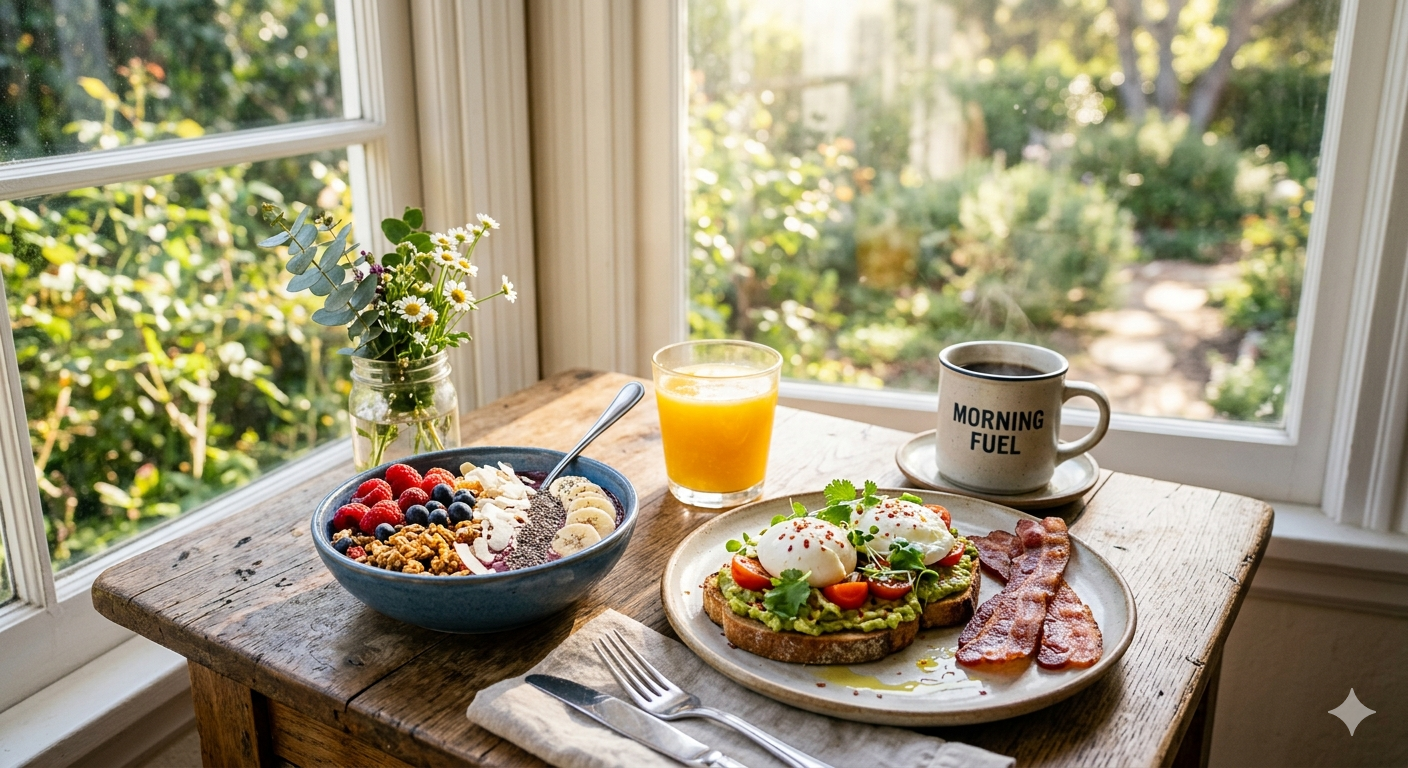
Even when you try to eat clean, a standard American breakfast is often a hidden carbohydrate bomb. Meals like oatmeal with fruit, whole-wheat toast, fruit smoothies, or cereal trigger a rapid rise in your blood sugar.
When your blood glucose spikes drastically, your pancreas secretes a massive wave of insulin to clear the sugar from your bloodstream. This sudden, aggressive drop in blood sugar is what causes a glucose crash.
While the initial crash happens a few hours after eating, it sets off a metabolic roller coaster. By 2:00 PM, your body is starved for quick energy, leaving you feeling completely drained, foggy, and craving sugar.
: What is Metabolic Armor?
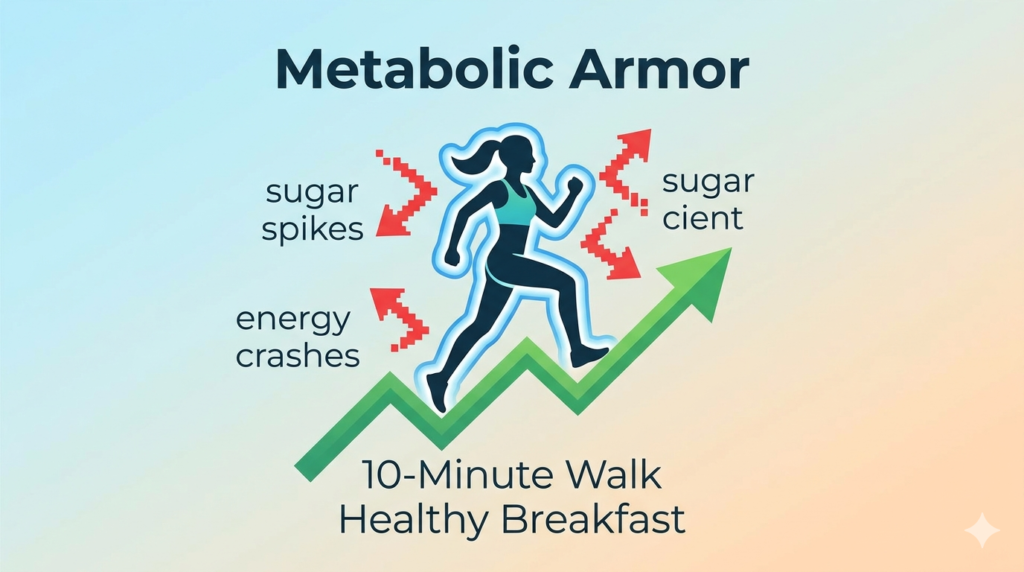
In the US fitness world, Metabolic Armor refers to using your skeletal muscles as a shield to protect your metabolic health.
Your muscles are the largest clearance sink for glucose in your body. When you activate them, they actively pull sugar out of your blood to use as immediate fuel. You do not need a grueling gym session to activate this shield—a simple, light walk is all it takes to protect your system from harsh spikes.
The Science of the 10-Minute Post-Meal Walk
:The Science of the 10-Minute Post-Meal Walk
When you sit down immediately after eating breakfast, your body must rely solely on insulin to process your food. However, walking for just 10 minutes right after your meal completely changes the equation:
- Glucose Uptake Without Insulin: Active muscles contract and absorb glucose directly from your blood without needing extra insulin.
- Flattening the Spike: Light movement keeps your post-breakfast blood sugar curve flatand smooth, rather than sharp and spiky.
- Improved Digestion: Gentle walking stimulates gastric emptying, which reduces bloating and improves overall digestion.
- By flattening that morning glucose spike, you prevent the hormonal chain reaction that inevitably leads to the 2:00 PM exhaustion wall.
- How to Build This Habit Easily
- As a busy professional or fitness enthusiast, you do not need to overcomplicate this routine. Follow these simple guidelines to maximize your results:
- Timing is Everything: Start your walk within 15 to 20 minutes of finishing your last bite of breakfast. This is when your blood sugar begins its steepest rise.
- Keep the Pace Gentle: This is not a cardio workout. Walk at a casual, conversational pace. A intense workout right after eating can actually divert blood flow away from digestion.
- Take it Inside if Needed: If the weather is bad or you work from home, pacing around your house, doing light chores, or walking on a under-desk pad works just as well.
- Protect Your Energy
- Beating the afternoon slump does not require expensive supplements or drinking endless cups of coffee. By taking a quick 10-minute walk after your morning meal, you actively build your metabolic armor and lock in steady, reliable energy that lasts well past 2:00 PM.
F A Q
1): How long should I wait to walk after eating breakfast?
You should aim to start your walk within 15 to 20 minutes of finishing your last bite. This timeframe allows you to catch your blood sugar right as it begins its steepest rise, effectively flattening the glucose spike before it causes insulin chaos.
2):What if I cannot walk outside after my morning meal?
An outdoor stroll is ideal, but indoor movement works beautifully too. You can pace around your home, complete light household chores, or use a walking pad at your desk. The goal is simply to keep your skeletal muscles contracting to soak up circulating glucose.
3): Will a post-breakfast walk help with weight management?
Yes. By actively building your metabolic armor and reducing large post-meal glucose spikes, you minimize excess insulin production. Lower, more stable insulin levels assist your body in accessing stored fat for energy rather than locking it away.
4): Should I walk fast or do a light jog?
Keep the intensity very light and conversational. Brisk walking or jogging forces your bodyto divert blood flow away from your stomach and toward your limbs, which can disrupt your digestion and cause cramping.
Conclusion: Take Control of Your Afternoon Energy Beating the dreaded 2 PM crash does not require expensive supplements, strict dieting, or flooding your system with endless caffeine. The secret lies entirely in how you manage your morning metabolism.
By committing to a simple, 10-minute gentle walk right after your breakfast, you actively build your metabolic armor. This small adjustment shifts your body off the blood sugar roller coaster, ensuring your energy, focus, and productivity remain completely locked in for the rest of the afternoon. Give it a try tomorrow morning—your afternoon self will thank you.